The One Page Plan
Plan the quarter on one page, and see what’s realistic before you start
How to write a short plan for your quarter, review it with the people it affects, and keep it alive until the work is done.

Created by
Richard Russell
The Fast Brain Coach
Last updated:
“We don’t plan, we’re Agile.”
Or the opposite: a 20-page plan with every step and contingency covered. It’s beautiful, if it’s ever finished. Nobody reads it, it never changes, and the person who wrote it takes every comment as an attack.
Both miss what a plan is for. A plan isn’t the work, and it isn’t a promise. It’s something you can change.
What a plan is for
A basis for change. You can see the impact and the trade-offs before you change anything.
A way to spot problems early, especially with dependencies and the stakeholders who are expecting things from you.
Shared ownership. Everyone who reviews the plan becomes a co-owner of it, even if it isn’t their team’s.
What goes on the page
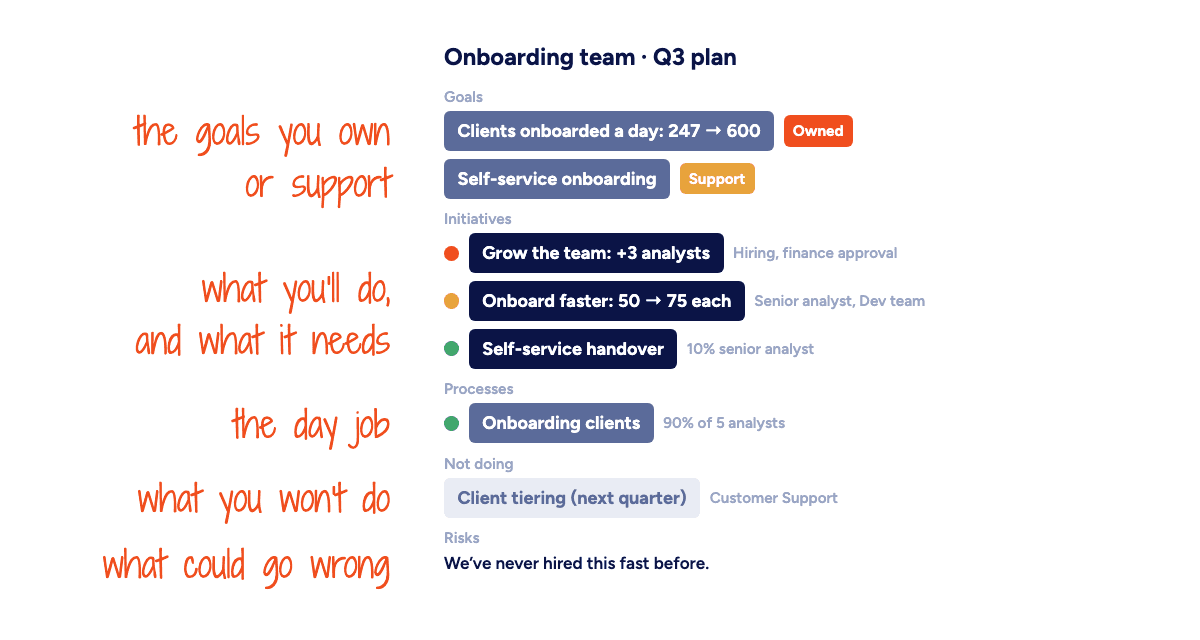
Your goals. The Objectives and Key Results you own, and the ones you support. Add the business-as-usual areas you’re responsible for.
Initiatives and processes. The projects that will deliver your goals, and the ongoing work that keeps the business running. One line each, half a page at most.
Resources and dependencies. What each one needs, including other teams, with a traffic light for how confident you are.
Then add only what helps the conversation: what you won’t do (and who’s expecting it), metrics and milestones, risks, and the topics people keep debating, with each view in a sentence.
Keep it to one or two pages. A short plan is easy to read, people feel comfortable critiquing it, and you won’t take it personally when they do.
Don’t do all the work
The plan is a plan, not the work. You have the whole quarter to solve the problems. If you can fix something in a half-hour meeting, do it. If not, put “solve this problem” in the plan.
Write, review, revise
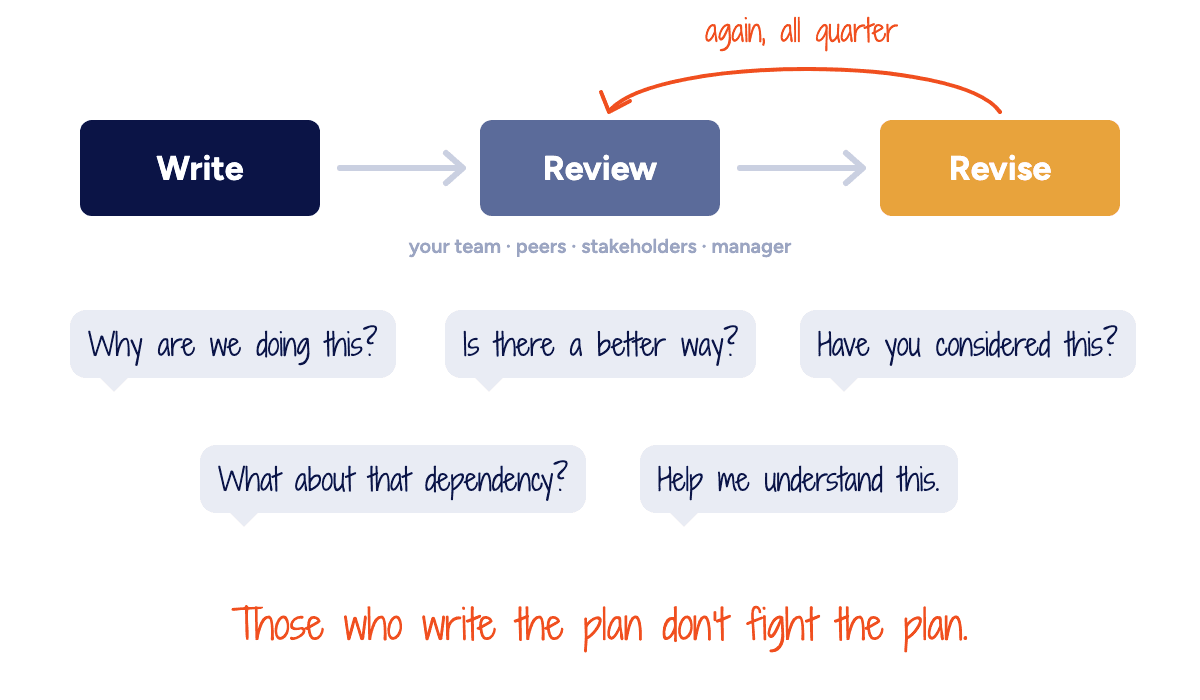
Share your plan with your team, your manager, your peers and the teams you depend on, including people outside your function. Reviewers don’t need to be experts. Simple questions do the work: Why are we doing this? Is there a better way? What about that dependency?
When a team can’t do everything that’s asked of it, you have three options: redefine the work to get most of the value for less effort, reprioritise, or reallocate people. If none of those works, that piece of work isn’t important enough this quarter, and knowing that is useful too.
Then keep using it. Each week, read short written updates, review the plan together, and change it when you learn something. It’s a living document, not a blueprint.
What’s in the guide
Who should write a One Page Plan, and how many you need.
How to write each section, and five ways to organise your initiatives.
A reviewer’s guide, and how to handle conflicts and dependencies.
How to use the plan in your weekly meeting, with written updates.
A worked example: an onboarding team getting ready for massive scale.
It’s ten pages, but it’s about how to write one.

The Guide
Plan your quarter on one page. Free PDF, no email needed.
Where it fits
The One Page Plan sits between your strategy and your weekly work. If you need a strategy first, you can use the One Page Strategy. If you use OKRs, the plan is how each owner gets their Objectives and Key Results done (see OKRs are simpler than you think).
Let’s meet
Book a 20-minute clarity call so we can get to know each other a little and explore your goals and what’s keeping you from them. We’ll finish with an invitation to work together, a recommendation to meet someone else, or simply a clearer next step.
You may also like


